

Custom automation and T-slot compatible components
Modular automation that scales with your project.
We design and build custom automation, and we sell the components it is built from. Everything works with standard T-slot profiles, so you can start with one SDLA linear actuator or have us build the complete machine.
- Mounts to
- Standard T-slot profiles
- Stock strokes
- 250 / 350 / 550 mm
- Assembled in-house
- Omaha, Nebraska
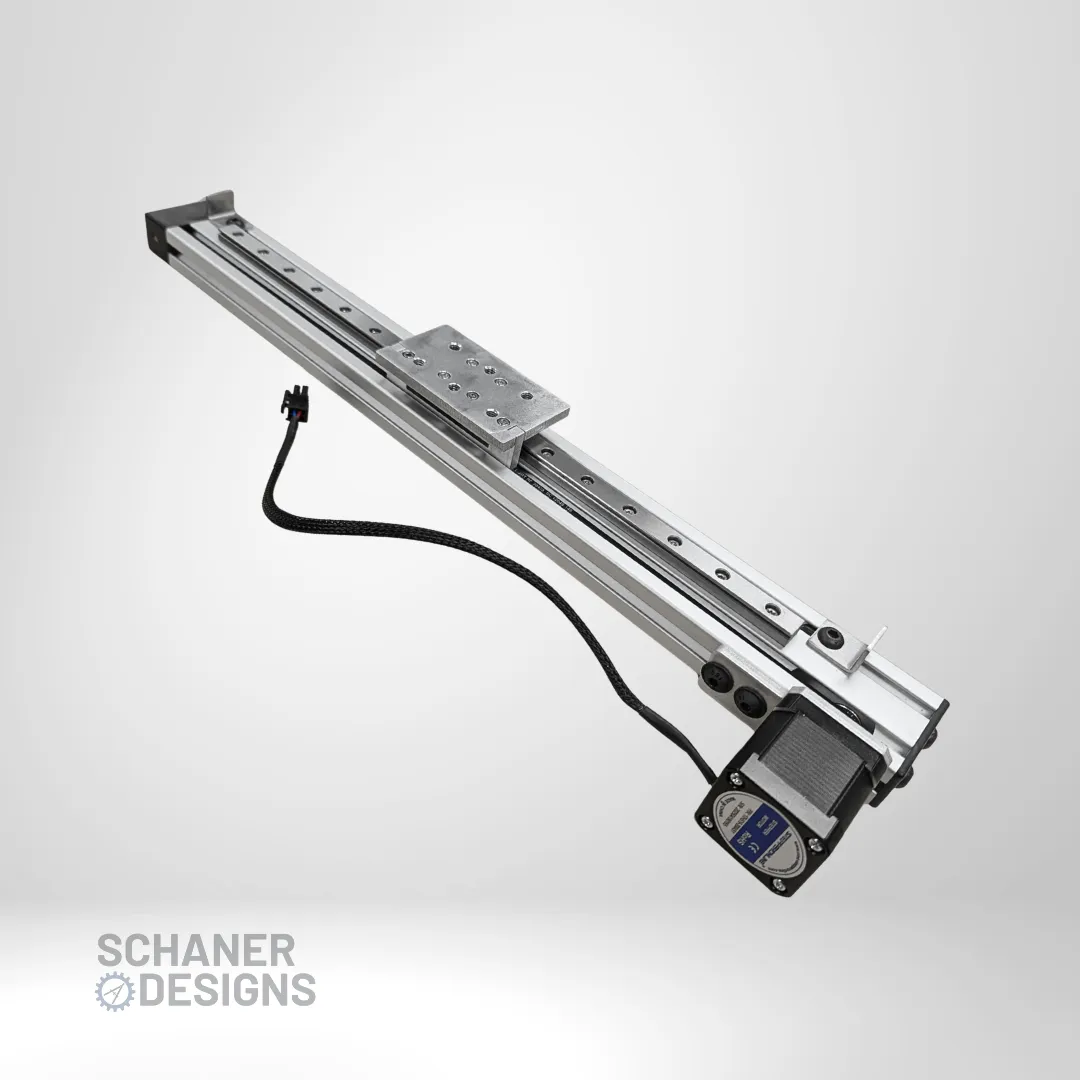
In stock, ships from Omaha, NE
SDLA linear actuators, T-slot compatible
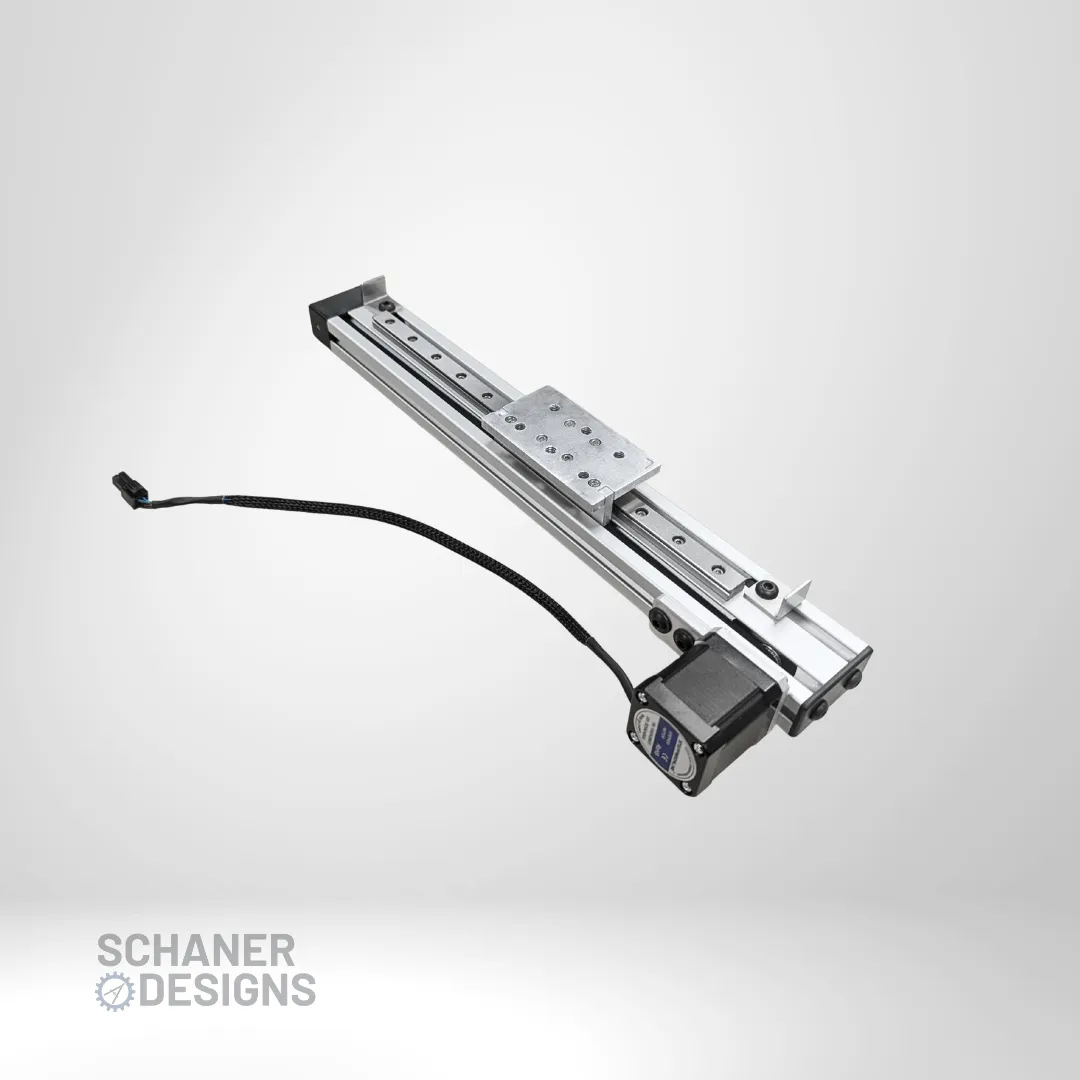
SDLA-1020-250
Compact belt-driven linear stage with a NEMA 17 stepper. Bolts straight to standard T-slot extrusion or to another SDLA.
View and buySDLA-1020-350
The most popular SDLA length. Belt-driven, NEMA 17 stepper, T-slot compatible mounting on every face.
View and buy Sold out
SDLA-1020-550
Long-stroke SDLA for gantries and transfer axes. Same T-slot compatible carriage and motor package as the shorter units.
DetailsIn use
The same components, running in real machines
More than linear actuators
Bag openers, part sorters, feeders, test fixtures, and pick-and-place systems, all built from the same modular parts.
Pick, rotate, and place in one move
Pick a part from one fixture, rotate it 180 degrees mid-transfer, and drop it into the next. Simple motion, repeated hundreds of times.
Most pick and place does not need a robot arm
Lift, traverse, maybe rotate, and a gripper. Simple repeatable motion does not need a six-axis robot.
High-speed pick and place with SDLA actuators
The same actuators we sell as standalone axes, bolted to standard T-slot extrusion. No special versions, no proprietary controls.
Works with standard T-slot profiles
Components built around T-slot extrusion, so machines go together faster
Every component in the line bolts to standard T-slot profiles and shares one plate pattern. Use them on our frames or on the extrusion you already have. Build an axis today, add a gripper or feeder next month, and nothing needs an adapter plate.
Linear actuators
SDLA belt-driven stages with NEMA 17 steppers, built on T-slot extrusion. In stock from 250mm to 550mm stroke.
CustomGrippers and end-of-arm tooling
Jaw sets and EOAT plates that mount to standard T-slot profiles and share the SDLA plate pattern.
CustomFeeders
Card, sheet, and part feeders built on the same T-slot extrusion and plate standards.
Coming soonRotary actuators
Rotary stages that mount directly to 10 and 15 series T-slot profiles. In development.
Custom machines
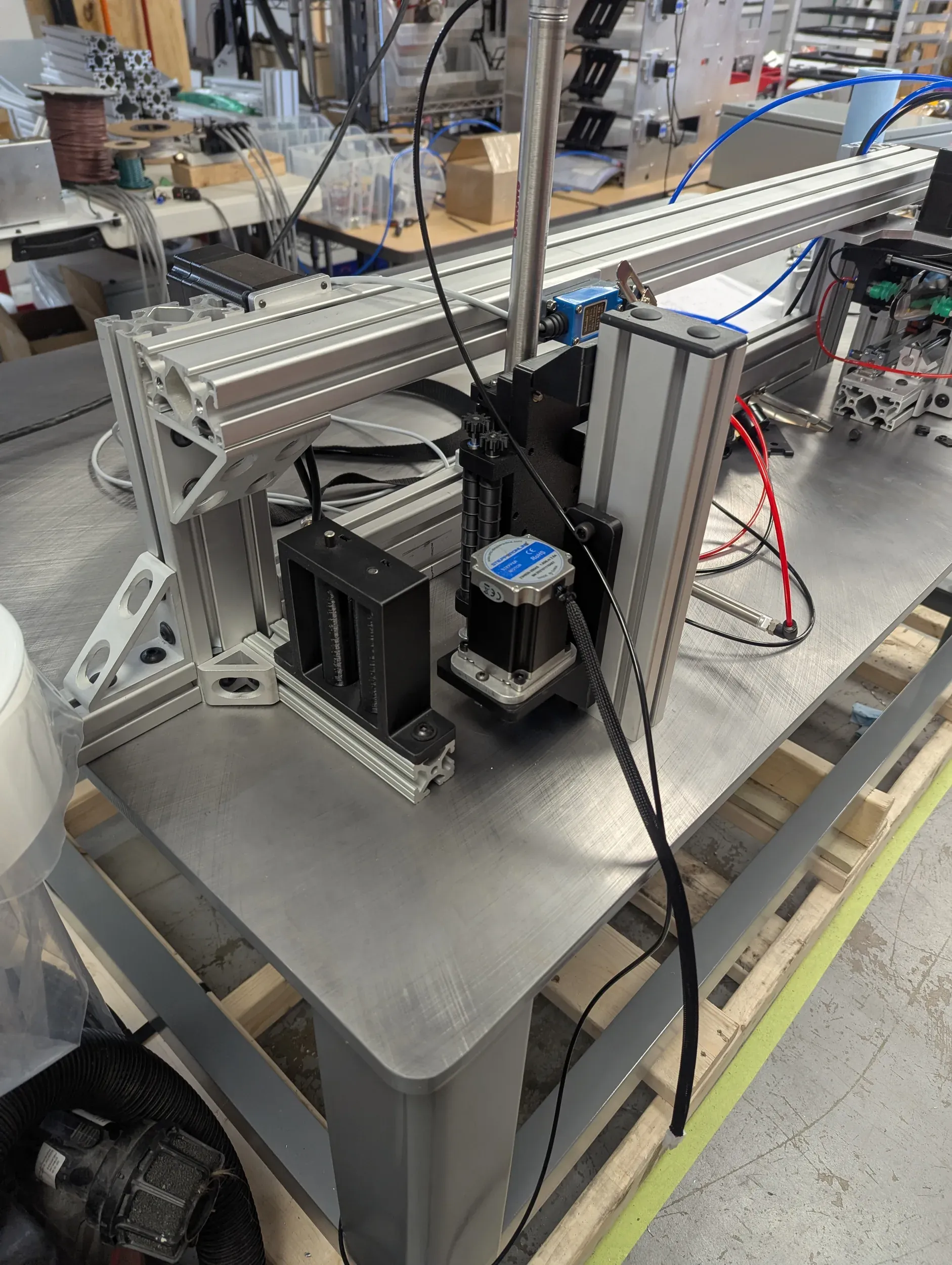
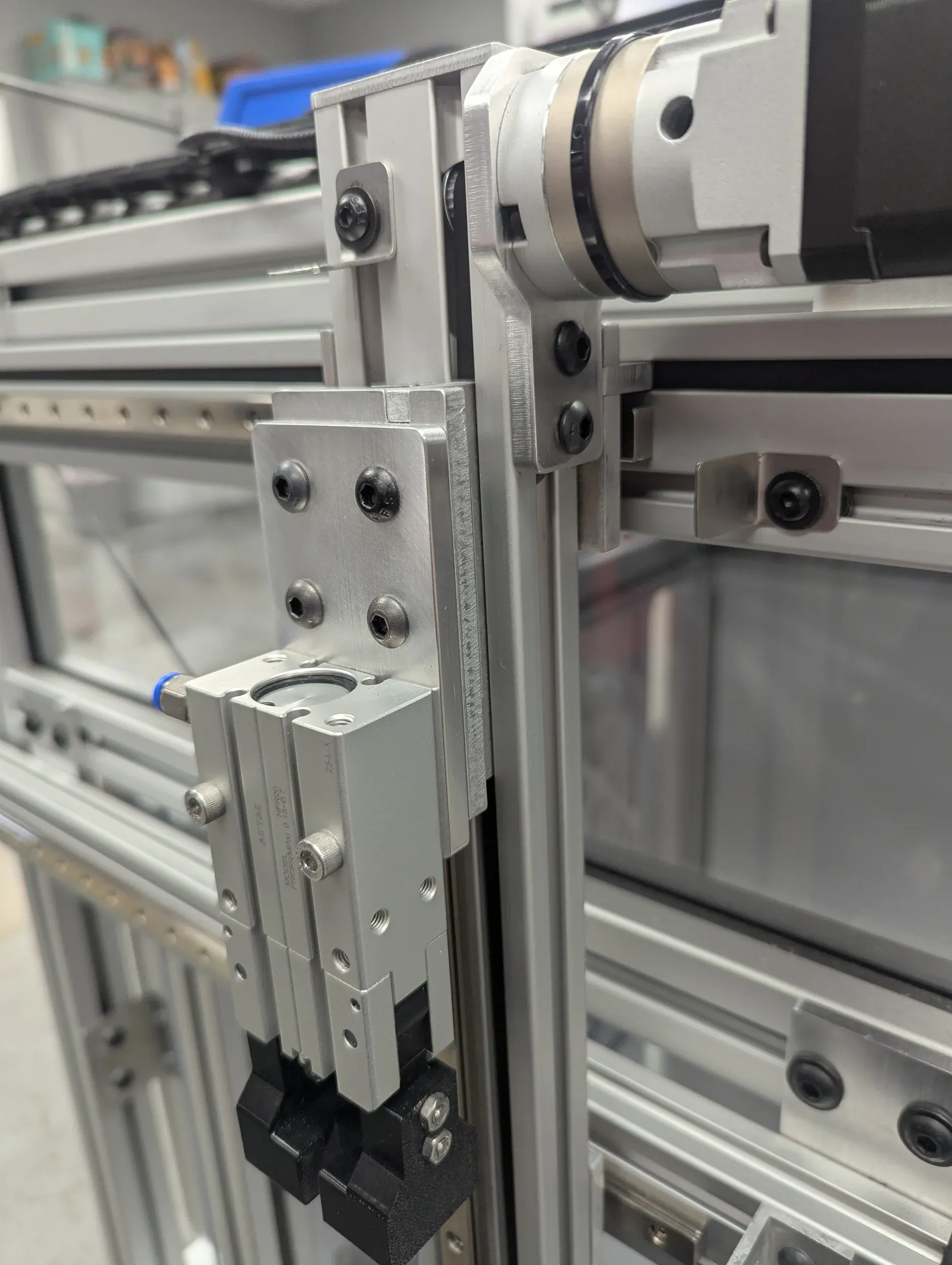
We also build custom machines, made with our own modular products
Feeders, sorters, presses, pick-and-place cells, and test rigs. We design in SolidWorks, machine and assemble in our own shop, and wire the controls. Because every machine is built on T-slot extrusion and our own component library, it is serviceable with parts you can buy on the site or from your typical vendors, and it can grow when your process does.
- 01 Concept and quote in days, not weeks
- 02 Mechanical, electrical, and PLC or stepper control in one shop
- 03 Drawings, BOM, and manual delivered with the machine
- 04 Built in our Omaha shop, shipped anywhere in the United States
How a custom project works
Five steps, one shop, no hand-offs between vendors
- 01
Talk
Start with a short call or email. A sketch, a photo, or a paragraph is enough. Within two business days we will tell you whether the job calls for a stock part, a modified component, or a custom build.
- 02
Define
Machine Definition on your parts and your process: concept, interfaces, risks and acceptance criteria. A fixed-price proposal with a concept design follows within five business days of kickoff and receipt of your parts.
- 03
Design
After the first payment we complete the final design. We walk you through it on a video review, and you approve it before fabrication begins.
- 04
Build
We machine, assemble, wire, and program the equipment in our Omaha shop, with a written update every week. We run it on your parts before it ships, then ship it anywhere in the United States.
- 05
Hand off
You receive drawings, BOMs, a manual, and training. Spare parts are called out in the BOM and are standard components wherever possible.
Services
Engineering support around the product line
Modular automation system design
Cells and machines built from reusable T-slot compatible components, so the next project starts from proven parts instead of a blank sheet.
Read moreSDLA actuator integration
Mounting, motion, and controls support for putting SDLA linear actuators into your own equipment.
Custom automation development
When a standard component does not fit, we adapt one or design what is missing.
Read moreAutomation roadmaps
A plan for what to automate first, what to standardize on, and how each machine builds on the last. Run remotely, anywhere in the country.
Read morePrototype to production
Fixtures, feeders, grippers, and test rigs taken from first article to a repeatable build.
Documentation and handoff
Drawings, BOMs, manuals, and training so your team can own the system after delivery.
What do you need to automate?
Send a sketch, a photo, or a paragraph. You will hear back from an engineer, not a sales queue.